

Apple today announced that American companies are supplying nearly 100 “critical materials and components” in more than a dozen states for both the iPhone 18 Pro and the iPhone Duo.
Apple works with suppliers in all 50 states and supports more than 450,000 American jobs. Last year, the company deepened that commitment by launching AMP, aimed at bringing even more advanced manufacturing and critical component production to the United States as part of Apple’s $600 billion, four-year commitment to U.S. manufacturing and innovation.
The company featured two of its US supply chain partners one of which is a new association, and another partnership that is expanding through the American Manufacturing Program (AMP).
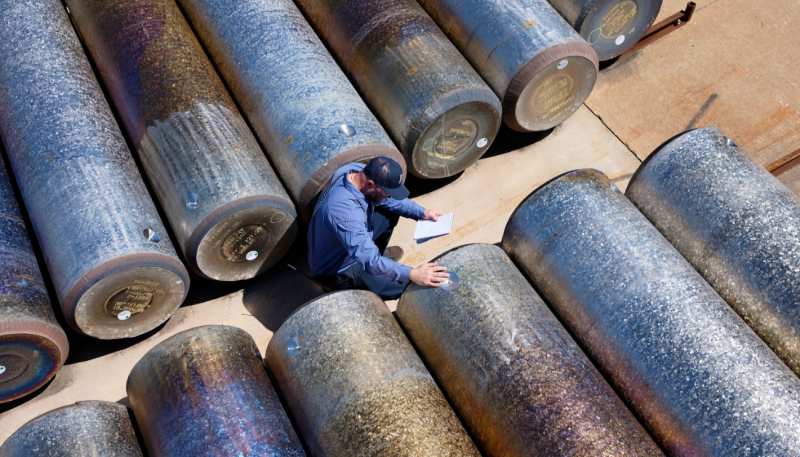
Through its American Manufacturing Program (AMP), Apple is partnering with Perryman Company, a Pennsylvania-based titanium producer, to supply titanium for Apple products, including iPhone Duo. Apple is also expanding its partnership with Qnity Electronics, headquartered in Delaware, to produce technology for the new variable aperture in the iPhone 18 Pro camera system — the most advanced Apple has ever made […]
“We’re thrilled to expand our work with companies producing advanced materials and components for our newest iPhone lineup right here in America,” said Sabih Khan, Apple’s chief operating officer. “American ingenuity is vital to all our products, from the titanium crafted for iPhone Duo to breakthrough camera innovations in iPhone 18 Pro. We’re proud to work with Perryman and Qnity Electronics to continue expanding our American Manufacturing Program and support U.S. jobs.”
The Cupertino firm says it will be committing up to $100 million over the next three years to assist Perryman in making the grade 5 titanium used in the enclosure for the iPhone Duo. Meanwhile, Qnity Electronics will be manufacturing a component used in the variable aperture lens of the iPhone 18 Pro.
“We’re thrilled to expand our work with companies producing advanced materials and components for our newest iPhone lineup right here in America,” said Sabih Khan, Apple’s chief operating officer. “American ingenuity is vital to all our products, from the titanium crafted for iPhone Duo to breakthrough camera innovations in iPhone 18 Pro. We’re proud to work with Perryman and Qnity Electronics to continue expanding our American Manufacturing Program and support U.S. jobs.”
Apple also highlighted the work performed by five additional US suppliers:
- Broadcom is expanding and modernizing its Fort Collins, Colorado, facility under a $1.5 billion capital investment announced in July, producing advanced radio frequency components for a wide range of Apple products. The multiyear agreement will produce more than 15 billion U.S.-made chips.
- Corning, an Apple partner since the original iPhone in 2007, produces specialty glass for Apple in Harrodsburg, Kentucky, including Ceramic Shield. By the end of 2026, all of the cover glass for iPhone — including iPhone Duo — and Apple Watch sold worldwide will be produced at this facility.
- Coherent continues building on its multiyear agreement with Apple, supplying new vertical-cavity surface-emitting laser technology from its Sherman, Texas, facility. This technology enables Face ID and other key features across iPhone and iPad, including the redesigned, even more useful Dynamic Island on iPhone 18 Pro and iPhone 18 Pro Max.
- TSMC’s Arizona fab continues to scale its production of advanced chips used across a range of Apple products, including iPhone, iPad, and Apple Watch — producing more than 100 million chips for Apple in 2026. Construction on the north campus is progressing as Apple’s partnership with TSMC in Arizona grows.
- Amkor Technology broke ground on its first high-volume packaging and test facility in Peoria, Arizona, in September 2025, and began shell construction earlier this year. Phases 1 and 2 of the project are expected to support a workforce of more than 3,500 local hires. Apple will be one of the facility’s first customers, marking another step toward expanding the scope of U.S. advanced manufacturing.
Apple says all direct suppliers are required to power their Apple manufacturing with renewable energy by the end of this decade, as part of its goal to be carbon neutral across its entire footprint by 2030.
