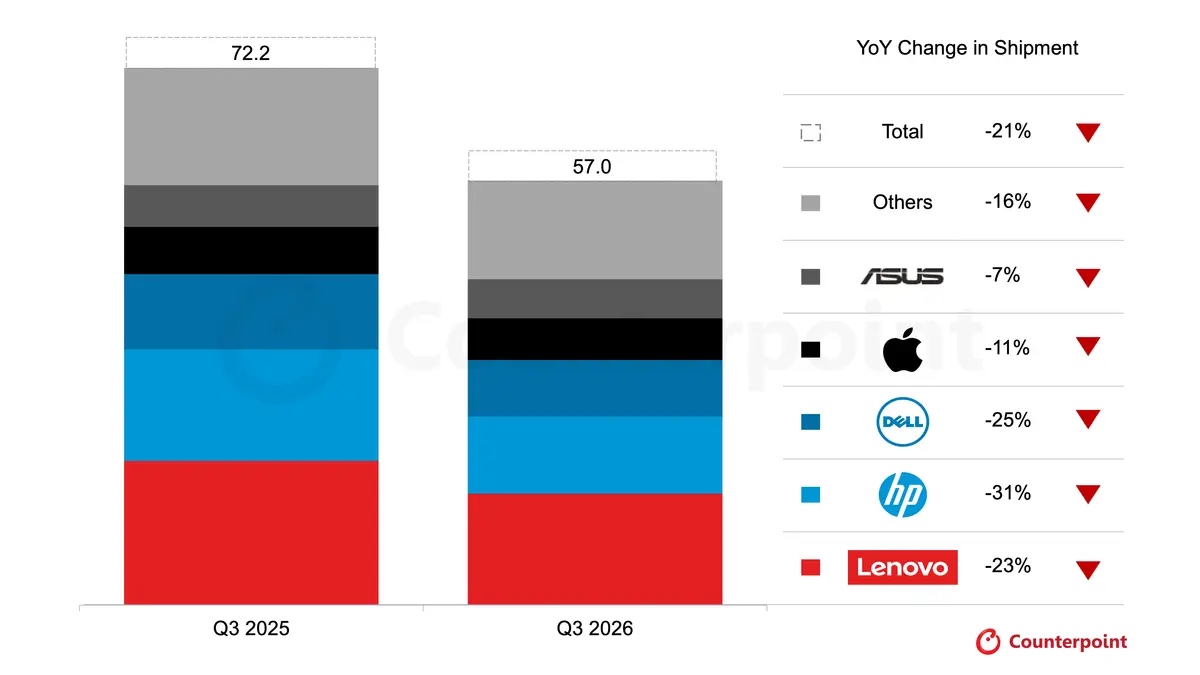
Apple was able to gain a larger share of the overall worldwide PC shipments during the calendar third quarter of 2026, says a Counterpoint Research report. The global market research firm points to Apple’s low(er) priced MacBook Neo as being responsible for at least some of the company’s performance, even as the PC market faces a downturn in global shipments.
Counterpoint’s preliminary estimates show Apple shipped 5.6 million units during the quarter, down 11% slide from the same quarter one year ago. Overall worldwide PC shipments fell 21% to 57 million units, with Apple’s market share inching up from 8.7% to 9.8%.
Five companies accounted for three quarter (76.7%) of global PC shipments, with other vendors shipping 13.3 million units, down 16% YoY.
Those top five vendors were:
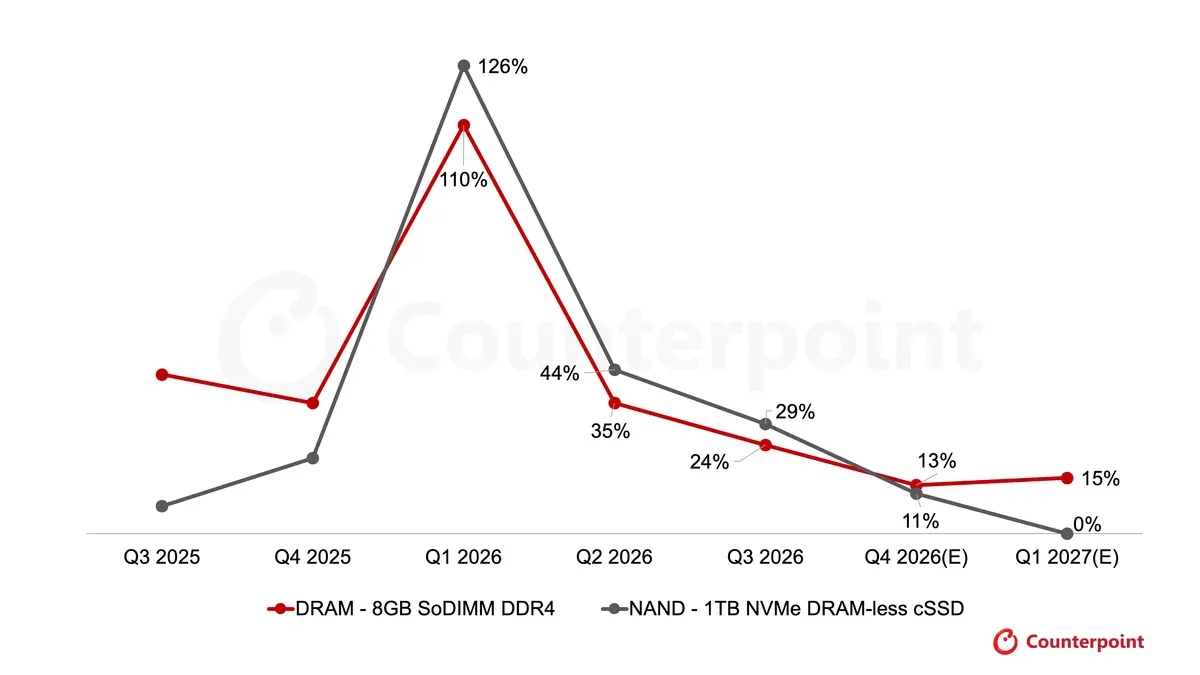
As many of us already know, the PC industry is sufering from ever increasing prices for components, such as memory chips and SSD storage, thanks to the heavy demand for such components by the AI data center industry.
Senior Analyst Minsoo Kang said, “The global PC market is facing mounting pressure as rising memory and component costs push system prices higher and force consumers to delay replacement purchases. While commercial refresh cycles and Windows migration continue to provide some support, they are no longer enough to offset weakening demand. Apple and ASUS have demonstrated greater resilience, outperforming the broader market through differentiated product portfolios and competitive positioning. However, with affordability becoming an increasingly critical purchasing factor, even market leaders are struggling to maintain shipment momentum.”
Even Apple, which has traditionally been able to get good deals on components thanks to its scale of production, has not been forced to raise prices hikes for its products. The MacBook Neo, which debuted in March at $599 for the base model, now carries a base price of $699 (U.S.). The MacBook Pro lineup has been hit with similar price hikes.
Counterpoint expects global PC shipments to continue to decrease with a predicted 27% year over year drop during the fourth quarter and shipments remaining flat during 2027.