

It’s a safe bet that at one time or another most of us have paid late fees and interest from time-to-time, but has that interest amounted to $184 million? Apple is being ordered to pay that amount of interest after losing its appeal of a $634 million Apple Watch patent judgment.
As reported by iDropNews, Apple’s long-running court battle with health tech company Masimo came to a final conclusion in July. When the Apple Watch maker was hit with a $634 million jury verdict in November 2025, it appealed the verdict, saying the court erred in considering the Apple Watch a “patient monitor” — a term meant to apply to clinical monitoring equipment.
Unfortunately for Apple, US District Judge James V. Selna didn’t buy that argument, and rejecting Apple’s final appeal. That meant the $634 million fine came due, and there are some interest charges Apple also has to pay a bit of interest, to the tune of $184 million.
As you might expect, Apple contested that decision, telling the court that this would “constitute a windfall for Masimo.” However, Judge Selna rejected that argument, saying that “interest from the time that the royalty payments would have been received merely serves to make the patent owner whole,” and is therefore not a “windfall to Masimo.”
The interest isn’t being charged on the fine itself, but rather on the royalty payments that Apple neglected to make to Masimo during all those years in which it was infringing the smaller company’s patents. The $634 million judgment is intended to cover the missed principal payments for royalties, while also including other damages.
That said, it’s not as bad for Apple as it could have been, but nowhere near as good as the Cupertino firm had hoped. While Judge Selna rejected Masimo’s request for a 7% interest rate under the California Constitution ($242.7 million), also rejected Apple’s request to pay a lower T-Bill rate ($114.5 million). Instead, the judge decided that Masimo’s effective borrowing rate of 5.09% served as a “closer proxy for any harm that Masimo suffered.” Judge Selna decided that there is “no reason to not simply use Masimo’s cost of debt, calculated by Apple’s expert.”
The $634 million patent judgment in this case may sound high, and it is, as it’s one of the largest amounts ever awarded in a consumer technology case like this. While Masimo didn’t get as much as it had wanted from Apple, it’s a nice piece of change more than the $3 million to $6 million that Apple was arguing it should have to pay, even as it was also arguing that it had never infringed on Masimo’s patents.
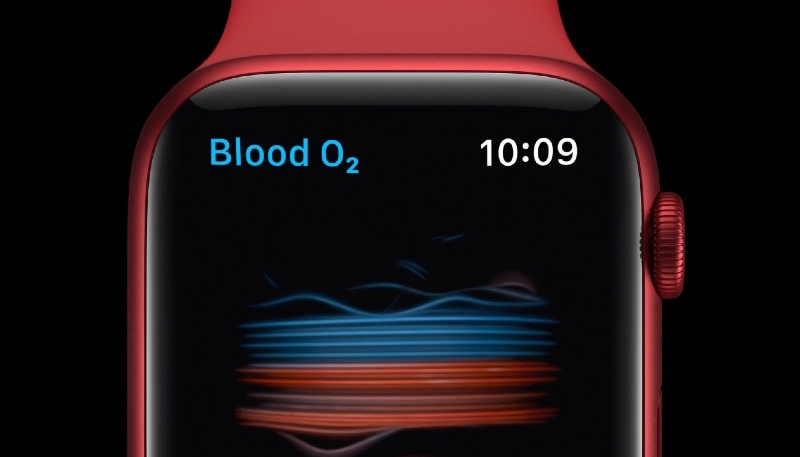
The patent dispute led to a ban on U.S. sales of Apple Watch with the blood oxygen feature enabled in December 2023. While Apple had been able able to temporarily continue selling the Apple Watch models during the appeal, the ban was reinstated as of January 18, 2024.
On August 14 2025, Apple released iOS 18.6.1 and watchOS 11.6.1, which brought a “redesigned” blood oxygen feature back to affected Apple Watch models. The restored feature relies on the a paired iPhone to process the Blood Oxygen sensor data from the Apple Watch. Results are then viewed in the Respiratory section of the Health app, instead of on the Apple Watch’s display, as it had done before.
While the change satisfied U.S. Customs regulators that had been charged with enforcing the original ban, Masimo disagreed, filing another lawsuit in an attempt to overturn the U.S. Customs decision and once again prevent Apple from selling Apple Watch models with the blood oxygen feature in the U.S.,
