

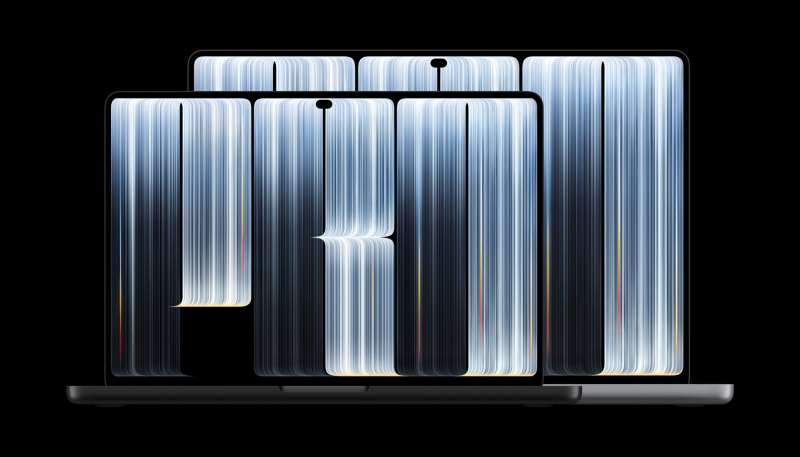
Some owners of Apple’s recently-released MacBook Pro with PROLED XDR display are complaining of eye strain, headaches, and dizziness when using the laptop. Some affect users point to the screen’s brightness-control system as a possible reason, reports MacRumors.
A significant number of users have complained on Reddit, X, and the MacRumors forums since the new models launched earlier this month.
On X, one user said trying the PROLED MacBook Pro in an Apple Store for around 30 minutes left them with a severe headache. The user called for an option to change the Mac’s dimming behavior.
Hopefully they also fix the PWM or allow you to disable it like on iPhones. I hated using oleds for years until PWM got civilised enough to not give me headaches. In 30 mins of playing around in the Apple Store the PROLED gave me a splitting headache.
— george 🇪🇺 (@georgechrc) November 10, 2026
On Reddit, a user said reading text, especially against a black background, brought on dizziness and nausea. They went on to say that their OLED iPad Pro did not produce the same symptoms. In the main MacRumors forum thread, a 16-inch PROLED owner reported a headache and mild nausea that began to ease after switching back to a mini-LED MacBook Pro.
Some believe the issue is pulse width modulation (PWM). An OLED screen produces light through its individual pixels. With PWM dimming, the display changes the time spent at brighter and darker levels during a rapidly repeating cycle. Spending less time at the brighter level reduces the average amount of light reaching the viewer, making the screen look dimmer.
While those fluctuations can occur too quickly to look like an obvious flashing screen, some people report discomfort when looking at displays that use them.
Notebookcheck‘s testing of the 14-inch PROLED MacBook Pro recorded 240Hz flickering whenever brightness was set to 99% or lower, with a measured amplitude of 56%. The publication warned that sensitive users could experience eye strain or headaches due to the specification.
Apple already provides a Display Pulse Smoothing accessibility option on supported iPhones. macOS does not offer an equivalent control, but Apple could possibly add one in the future.
