

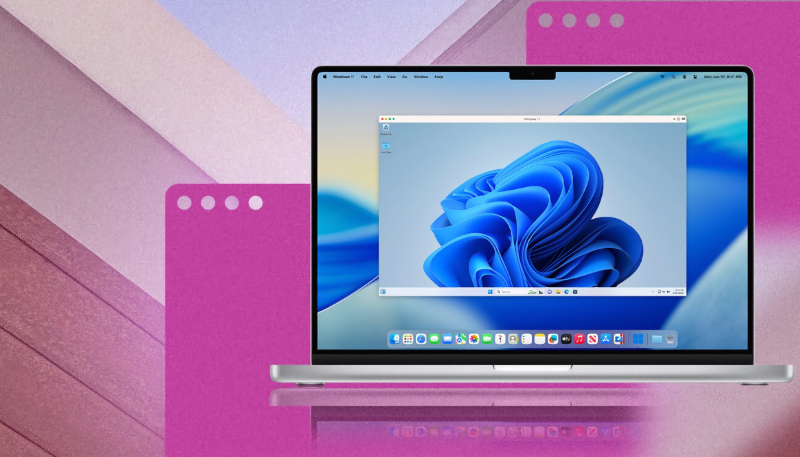
Parallels has released version 27.0.0 (build 58628) of its popular virtualization software, Parallels Desktop. The version 27 update brings several behind the scenes features and fixes, providing support for macOS running on Apple Silicon, including the macOS 27 Golden Garte update that will likely be released to the public in September.
What’s New and What’s Fixed
First off, it should be noted that version 27 drops support for Intel-powered Macs. However, the company promises to continue to offer periodic security and compatibility updates for version 26.
Parallels Desktop 27 offers several improvements.
Parallels Desktop now offers the ability for Windows and Linux virtual machines to use Apple’s Scalable Matrix Extension (SME) CPU feature on M4 and M5 chips, accelerating heavy workloads, including local AI inference.
The company says the new version offers up to 7 times faster AI and machine learning matrix operations compared to the previous version, while providing up to 1.75 times faster neural network inference.
Jamf users will now have tools available for managing multiple Parallels Desktop 27 installations.
Several fixes are included for several security vulnerabilities in the virtual networking stack, virtual GPU command processing, and VirtIO subsystem. The update fixes memory corruption issues, out-of-bounds reads, and privilege escalation vectors.
“As customers continue to push the limits of what they do on Mac,” said Elena Koryakina, Chief Product and Technology Officer at Parallels in a statement, “they’re looking for virtualization that keeps pace with increasingly demanding applications and workflows.”
“Parallels Desktop 27 enables customers to run more of the Windows applications they depend on,” she continued, “while giving developers faster local AI performance and expanding what’s possible on Apple Silicon.”
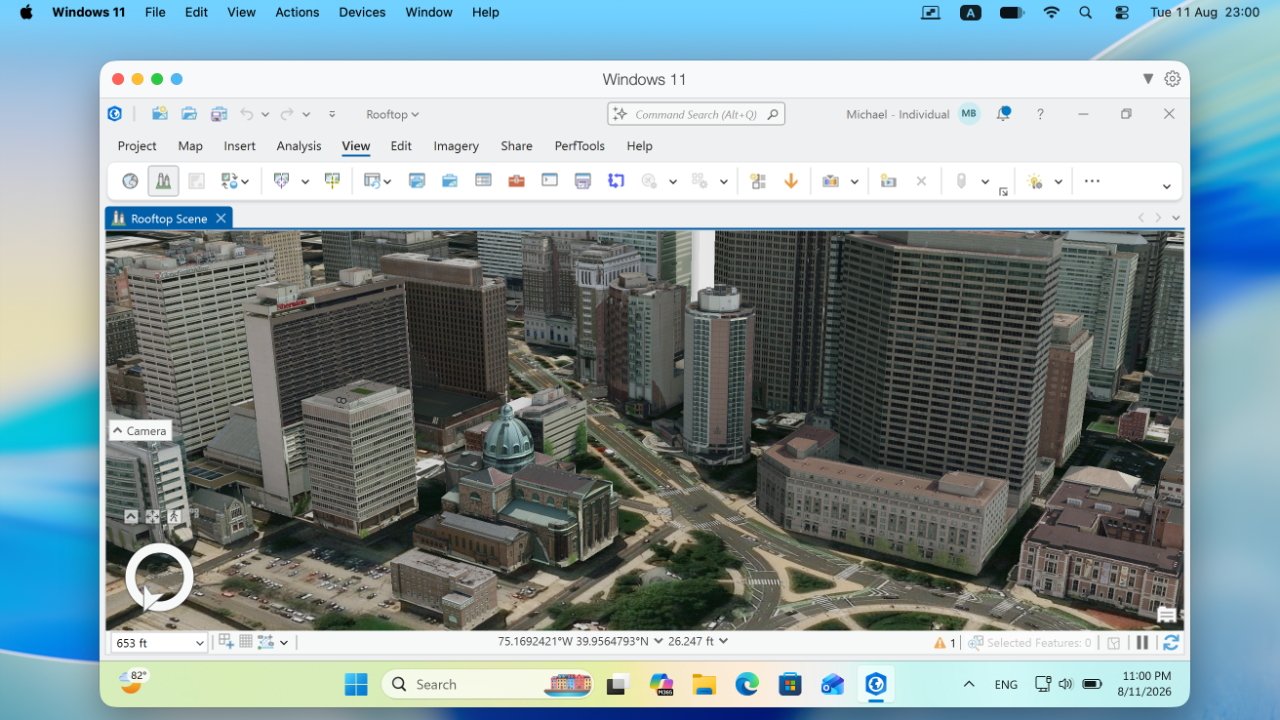
A reengineered OpenGL driver powered by Apple’s Metal API, raising support from OpenGL 4.1 to 4.3 for all Windows virtual machines. The change is said to be up to 2.6x faster in benchmarks on Macs powered by an M3 chip or newer.
The reengineered driver includes a new Metal-based OpenGL 4.3 graphics driver, up to 160% faster OpenGL graphics performance on Macs with M3 chips and newer, and up to 35% faster 3D rendering in ArcGIS Pro
Parallels offers out-of-the-box support for several new Linux distros, including Fedora 44, Debian 13.6, Ubuntu 26.04 LTS, Ubuntu 26.04 LTS (x86_64 emulation), and Kali Linux 2026.2.
Users running headless Ubuntu Arm virtual machines can now update Parallels Tools using the command line, as it no longer requires a graphical session to do so. Parallels also updated the shared folders daemon (prl_fsd) from libfuse2 to libfuse3 to provide improved stability and compatibility when running modern Linux distributions.
Parallels Desktop for Mac 27 is now certified as “ARM SystemReady SR 3.1 (VE band)”, enhancing compliance, providing improved compatibility with new OS releases, while reducing the risk of unexpected issues.
The update also fixes an issue that prevented a provisioning package from being applied during Declarative Deployment on virtual machines running Windows 24H2.
What’s Missing in Parallels Desktop 27
Parallels has said it has listened to users participating in its ongoing Parallels Customer Experience program about what features they use on a regular basis, or use at all, for that matter. It resulted in dropping the following features from this version of Parallels Desktop.
- Installation of Parallels Desktop 27 on a Mac running macOS Ventura 13.
- Support for Intel Macs and Boot Camp.
- Travel mode.
- Unread email badge and new mail notifications for Classic Outlook.
- The “Security” tab in Parallels Desktop preferences.
- Shared Bluetooth functionality.
Online Windows Apps Compatibility Database
Parallels has also launched an online database that allows users to check which Windows apps are now supported. There are said to currently be over 200,000 Windows apps included in the database marked as working with Parallels.
Parallels Desktop 27 is a subscription app. Different price tiers are available for individual users, business, and enterprise customers. While the typical price is $185 per year, the company occasionally offers discounts for first time users and renewals.
To learn more about Parallels Desktop 27, visit: www.parallels.com/blogs/
To learn more about Parallels Desktop for Enterprise, visit: www.parallels.com/products/
