
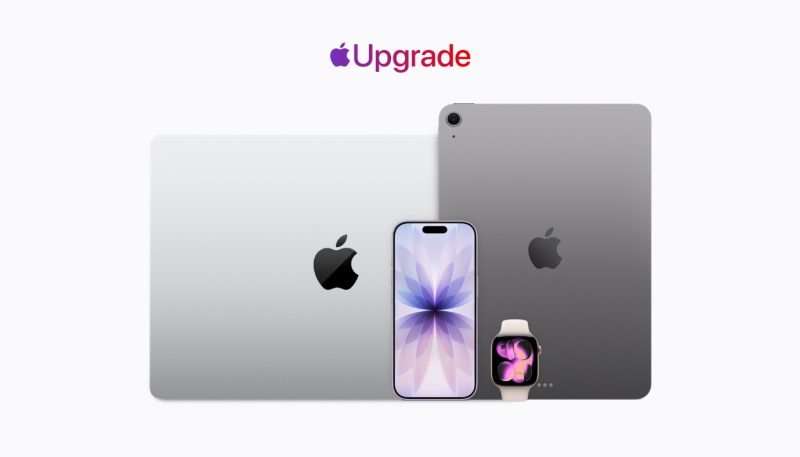
Apple has officially terminated its iPhone Upgrade program in favor of its new Apple Upgrade leasing program, allowing US customers to lease a new iPhone, iPad, Mac, or Apple Watch and make payments via Klarna.
The Apple Upgrade program has lower base prices than the iPhone Upgrade Program, with iPhones available starting at $17.99 per month. The Apple Watch starts at $11.99 per month, while Macs can be leased starting at $24.99 per month, and iPads start at $11.99 per month. It should be noted that you’ll need to pay extra for AppleCare+ (which is optional), with customers also able to opt for AppleCare One.
Customers will have 12-month and 24-month leasing options for the iPhone and Apple Watch, and 24-month and 36-month leasing options for the Mac and iPad. The actual lease cost is based on device, and is lower if you have a device trade-in (which is applied on a monthly basis).
Apple has provided sample pricing, minus taxes and trade-in credits:
- 256GB iPhone 17 Pro ($1,099) – Monthly payment is $31.99 with a 24-month lease or $45.99 with a 12-month lease.
- 42mm Apple Watch Series 11 ($399) – Monthly payment for a 24-month lease term is $11.99 per month, or $21.99 for a 12-month lease term.
- 256GB iPad Pro ($1,199) – Monthly payment is $24.99 for a 36-month lease term, or $31.99 for a 24-month lease term.
- 16GB 14-inch MacBook Pro ($1,999) – Monthly payment is $38.99 for a 36-month lease, and $53.99 for a 24-month lease.
iPhone leasing customers are required to choose a plan from AT&T, Verizon, or T-Mobile, and prepaid plans are not eligible. While iPhones need to be leased with a carrier plan, they are unlocked so customers can switch carriers if desired. MVNOs like Mint Mobile or Visible are not supported in the program.
Once the end of the leasing period arrives, customers can choose to return the device and exit the program, pay off the remaining amount owed on the device with a one-time payment and keep it, or return it and upgrade to a new device with a new lease. Folks that prefer to lease their cars or trucks will recognize how all of that works.
The payoff amount is the difference between what was paid during the leasing period and the retail price of the device, minus any remaining trade-in credits. If you don’t opt to pay off the difference at the end of the leasing program, you must return the device.
Apple will send a pre-labeled and prepaid shipping box for trade-ins, device returns, or upgrades.
Apple appears to be heading off fears of users getting an iPhone through the new program and not paying for it, as code discovered in the iOS 27 beta allows the Cupertino firm to severely limit the usage of an iPhone whose owner is behind on payments. The code in the iOS 27 beta includes a reference to limiting usage. However, the code doesn’t provide a clue as to whether it will happen on the first missed payment or a larger number of missed payment deadlines.
The “App Managed Features” framework gives Apple the power to switch on a “Restricted Mode.” While in this mode, users would only be able to use the phone plus the following features:
- Accessibility Reader
- App Store
- Health
- Magnifier
- Clock
- Settings
- Wallet
- Passwords
Apps that can send critical alerts may also remain accessible for safety reasons, such as Messages, Home, medical, and other safety-related apps.
Another new framework, called “Partner Finance Lock,” looks to block users from erasing the iPhone. It also blocks reselling the device, or even stripping it for parts.
While the new frameworks exist within Find My, this doesn’t give the financing company any access to the device’s location, so you don’t have to worry about Emilio Estevez showing up at your door to repo your iPhone.
Of course, if Apple goes through with the ability to LoJack a customer’s iPhone, they will have to do their best to ensure that it doesn’t happen by error, or that the less-than-savory types out there figure out how to trigger the shutdown for malicious purposes.
As mentioned above, the Apple Upgrade leasing program is replacing the iPhone Upgrade Program, meaning it can no longer be used to purchase iPhones. Current participants can continue to make payments until their existing iPhones are paid off, but at the next purchase, they will be required to switch over to Apple Upgrade or another payment option. Apple Card users can continue to buy devices with the Apple Card Monthly Installments plan or choose Apple Upgrade and get 3% Daily Cash back on lease payments made with Apple Card.
Apple Upgrade purchases can be made both online and in-store. Customers simply select their preferred leasing option, and after a soft credit check, get an instant approval from Klarna if they are eligible. Customers can use the Klarna app to manage lease information like billing schedule, total price, and remaining payments.
While most iPhones, iPads, Macs, and Apple Watch models are eligible for Apple Upgrade, iPhone 16, iPhone 16 Plus, Apple Watch SE, MacBook Neo, Mac mini, iPad (A16), and Studio Display purchases are not available. Apple Upgrade also cannot be used with EDU discounts, and leases aren’t available for refurbished devices. Apple also excludes purchases made with the Apple Employee Purchase Plan and business, government, veteran, and military purchase programs.
