

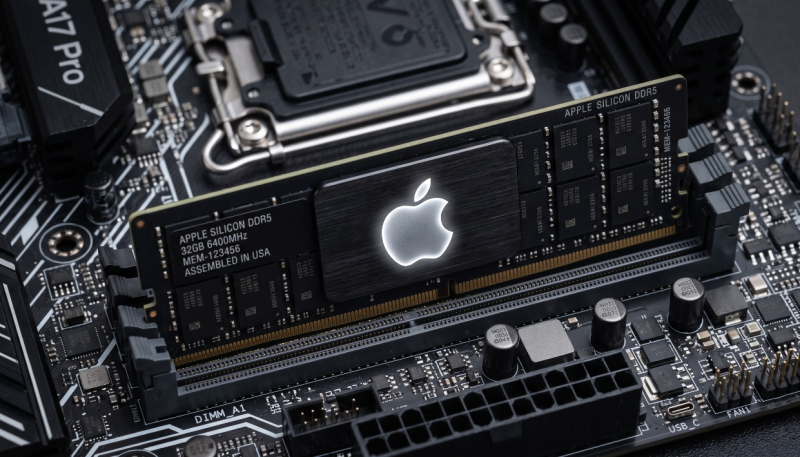
Apple supplier SK Hynix wants to start manufacturing memory chips on US soil, and it’s looking for help from US chipmaker Intel to get the ball rolling, according to Reuters.
Due to the global memory chip shortage that is costing companies like Apple, Dell, and others to pay through the nose for memory chips, chip producers are looking to expand production. SK Hynix is no exception, as the South Korean firm is looking to bring production to US shores, according to sources of Reuters, who say the company is in talks with Intel.
The report says the deal would potentially see SK Hynix lease a section of Intel’s planned Ohio facility. Another possible option would see SK Hynix creating a joint venture with Intel and AI companies that are consuming memory supplies.
The talks are currently only exploratory in nature, and nothing is set in stone. SK Hynix is said to also be exploring other deal structures.
While the more memory being available via such a deal sounds wonderful, any any deal the memory company makes with Intel about its Ohio production won’t have an impact on the situation for several years.
Intel originally announced the plan for the $20 billion Ohio facility back in 2022, with the intention of opening by 2025. However, delays mean the facility is now planned to be completed sometime between 2030 and 2032.
While SK Hynix already plans to expand its memory production in South Korea, that also won’t have an immediate impact. The new $38.3 billion semiconductor fabrication plants were announced in August 2026, but won’t be ready for mass production until 2029.
The Trump Administration, which wants to increase US-based production, would see the new US deal with Intel as a huge win, especially since the Korean firm is a supplier to Apple. However, any deal would depend on SK Hynix being allowed to make the deal by the South Korean government, which could block the deal due to the sensitive technologies involved.
